 By Rev. Jimmy Pickett We have a choice to make – as a people, as a community, as a nation. That choice is played out in this morning’s Lessons from Scripture. I’m not talking about a choice about party alliance, or political issues or ideologies, I’m taking about the choice between violence and mercy, between hatred and grace. In our Gospel from Mark this morning, we hear of the martyrdom of John the Baptist under the corruption of King Herod. A birthday party that sounds like an episode of Game of Thrones stands in stark contrast to the abundant Grace and blessing upon blessing that we hear in the Letter to the Ephesians and the joyful dancing that comes when God’s people gather together to bring the Ark of the Covenant, the footstool of God, into the Holy City of Bethlehem. Although, there are a few short words that come just after King David is dancing with joy – “she despised him in her heart”. In our Gospel we hear of grudges, and scandal, and greed leading to a gross display of power and disregard for the dignity of another human being – the head of John the Baptist on a platter. This morning, I wear this orange stole, a symbol of lament that is inspired by the Bishops United Against Gun Violence, because there are too many stories in our world today that sound too close to this scene. There are too many innocent victims in the world because anger and fear are allowed to have the upper hand while mercy and justice are seen as weakness. Just yesterday, two people were killed and two others critically injured at a political rally in Pennsylvania. We have a choice. Will we let hatred for the other win the day or will we lean on the Beloved and allow the way of non-violence to show the world the Mystery of Grace revealed in the God we follow? Elsewhere in the Gospels, when talk of division comes up among the disciples about who is the greatest, Jesus immediately stops that debate and calls them to instead love and serve each other during the Last Supper as Luke tells us. And then in the Garden of Gethsemane, Jesus tells Peter to put away his sword when he tries to protect Jesus. As Christians, we are called to live in a new way of loving our enemies – the freely given gift of the Grace of God working in our hearts can uproot the hatred, the grudges, the grief, and the fear that leads to spiritual and sometimes even physical violence. Hatred hurts the one who is hated, the one who hates, and the whole of society. Grace and Mercy heal wounds, bind up and build up relationships, and cause communities and Creation to flourish. As Episcopalians, we have two Great Sacraments that help us to feel in our hearts and hands the Grace of God which passes all understanding. In our Baptism, the words of Ephesians ring as we are signed, sealed, and delivered by the Grace freely bestowed by the abiding presence of the Holy Spirit. We also have the Baptismal Covenant to help guide us as we live into our calling – “Will you strive for justice and peace among all people and respect the dignity of every human being?” (even the ones I really don’t want to) I will, with God’s help. In the Eucharist, we are caught up in the Life, Death, and Resurrection of Jesus, who descends to hold us by the hand, to nourish and strengthen us in our calling to be the Body of Christ, loving and healing, in the world around us. Grace is freely offered; all we are called to do is lift up our heart and then go in peace to love and serve our neighbors in Jesus’ name. May God mercifully receive our prayer and give us the Grace and power to beat our swords into plows and our spears into pruning hooks, that the Good Fruits of the Gospel of Love Incarnate may grow in the soil of this land.
0 Comments
 by Rev. Jimmy Pickett
Today’s Teaching Sermon will focus on the end. Don’t worry, not the end of all things, but the end of the liturgy, or more accurately, how the Dismissal is an integral part of our life of faith and witness in the world. The Dismissal is not like the school bell that calls us to recess nor does it dismiss us from class or excuse us from work, it is the hinge point between our worship and our witness. As Episcopalians, one of the member branches of the Anglican Communion, we are the inheritors of a particular way of living our faith out in the world. There is a branch of Practical Theology known as Anglican Social Ethics. At its core, this particular kind of witness is marked by a constantly evolving tension, at best a life giving tension, between Scripture, Tradition, and Reason. As Fr. Richard Meux Benson, founder of the Society of Saint John the Evangelist, said “the necessary thing for us is to set about old things in new ways”. I wish I could give you an easy checklist of to-do’s to make for a simple and easy Anglican Social Ethic, but our tradition is so situational that each of us needs to come up with our own list based on the situation we find ourselves in. Our list of personal and corporate prayers, practices, study, rest, and work to be done is based on particular life circumstances and the particular moral questions at hand. Scripture, Tradition, and Reason (lived experience), are the collective markers that can help point us toward the right decisions and actions. Again, there is this tension between the old and the new, the particular and the general, the personal and the communal. We lean on Scripture to learn how God and humanity interact and respond to each other. My Hebrew Scripture professor in seminary, Dr. Judy Fentress-Williams, once called Scripture a love story between the Human and the Divine. We lean on the Tradition we have inherited in our worship. The words may change from generation to generation, from community to community, but the common Ordo, or shape, of the Liturgy remains. The deep and ancient rhythm of worship - of gathering together, reading and responding to the Living Word in Scripture, praying for the needs of the world (and our own needs), confession, forgiveness, peace, the offering of our gifts, the taking, blessing, breaking, and giving of the Bread of Life, and being sent out - shapes us and points us to the dream God has for us. We lean on Reason and experience to make sense of our time and place as we share this life together with our neighbors. As Anglicans, we gather around Book, and Font, and Altar to be nourished by the Ancient and the Holy in order to go out to learn with, abide with, and break bread with whoever we meet. I’ll give you a couple of examples of what this can look like on the ground and then share my experience and then I’ll invite you to reflect on how you will go out into the world with the commissioning of the Dismissal. Dr. Esther Mombo, in her article “Doing Theology from the Perspective of the Circle of Concerned African Women Theologians”, describes her experience. Dr. Mombo is a Kenyan Anglican, Theologian, and Professor at St. Paul’s University in Limuru, Kenya and she is a member of a community known as The Circle of Concerned African Women Theologians. The Circle is an eccumenical and interreligious gathering of grassroots theologians from a diverse variety of socio-economic and cultural backrounds who are committed to living life together while critically engaging with society. They do this work by studying Scripture and culture, learning from each other in a pluralistic religious environment, focusing on formation for ministry and theological education, and listening to the stories of women in order to “do theology”. The Circle looks at structures of society and questions if they are in line with the love of God and neighbor. These questions have led to actions and social reform rooted in the continual revelation of God’s work of reconciliation. Another example: Dr. Timothy Sedgwick in his article, “The Anglican Exemplary Tradition”, explains the distinct nature of Anglican Social Ethics. The Exemplary Tradition is a way of living out a practical piety where Jesus is our great exemplar, calling us to model our lives around acts of worship and hospitality. For Dr. Sedgwick, social ethics is not just a thought experiment in a classroom or a sermon illustration, but a practical set of practices for living the Christian Life that holds a Sacramental vision for the relationship between church and society. “The final end of the love of God and neighbor is given in specific intentions embodied in particular actions such as eating and drinking, care for those in need, and prayer and worship”. Now for my own experience. A year ago, when I was in my last semester at Virginia Theological Seminary, one of my professors brought a classmate and I to Nashotah House, another Episcopal Seminary out in Wisconsin for a weekend of prayer, fellowship, and conversations. VTS and Nashotah are pretty much on the opposite ends of the theological and political spectrum from each other. While there were many differences in thought, there was fruitful conversation born out of common respect, common worship, and the sharing of meals and stories. This kind of cross political and cross theological conversation helped me to dig deeper into my own call and vocation- literally dig- of being both farmer and priest. When I was about 12 years old, I began to serve as an acolyte and week after week I would stand next to the Altar. I was transfixed on the Bread that was being lifted, and broken, and shared in blessing. My theological imagination was sparked and I could never see food the same way again. Being nourished by the Body of Christ to be the Body of Christ sent me to go study Sustainable Agriculture in college where I said yes to God’s call on my life while I stood in a field of onions with community members growing food for local food pantries. And here we are now. You've heard the basic structure of Anglican Social Ethics and listened to three stories of how we can live into the tradition we have inherited. Now what is God calling you to do with your Baptism? How is God calling you out the door to be the Body of Christ? How will you respond to the commissioning of the Dismissal? How will you come back next week, changed? Amen. by Rev. Jimmy Pickett  Oftentimes when I think of the beginning of Jesus’ public ministry, I tend to think about John’s account. John tells us of a Jesus who is trying to not make a big scene, but Mamma Mary knows what her kid is capable of and sort of gently pushes Jesus into performing the first miracle of turning water into wine at the Wedding of Cana. But that’s not what we hear today. Mark, always seemingly running out of time, immediately shows us Jesus the exorcist, the joy of preachers everywhere during this lectionary year…
Upon first reading, this story from today’s Gospel seems like a scene out of a horror movie with a yelling priest and a kid with a spinning head. Thanks Hollywood. But upon second reading, as I sat at my friend’s kitchen table earlier this week, sharing my frustration about interpreting this text, we both came to a bit of a deeper understanding of what might have been going on here. Centuries of translation, tradition, pop culture, and less than helpful misunderstandings of mental and emotional health have been piled onto Mark’s telling of this healing miracle in Capernaum. Oftentimes the term “unclean spirit” is understood to mean a demon which makes it easy to jump to the idea of demonic possession, but when we strip away the layers of added baggage and let the original text speak for itself, we can come to a deeper understanding of what Jesus is doing for this man. As we were sitting around the table, there was one word that my friend noticed in the original Greek text that stood out, and the only reason I became aware of it is because I spoke the demon of my frustration out loud. In the light of day, that frustration dwindled away and gratitude and curiosity took its place. That one word in verse 26 translated as “unclean” is written ακάθαρτος (akathartos). This discovery got me curious about the opposite. What is the word for to clean, or purify, or to purge away? Καθαρίζω (katharizo), or in modern English, catharsis. Moments of catharsis are so important for our emotional, mental, and spiritual well being, they allow us to clear out whatever is blocking us from moving forward. In Mark’s account of this healing in Capernaum, we aren’t told anything else about the person Jesus meets, only that they cried out in a moment of catharsis. When Scripture leaves this vague emptiness of detail, Ignatious of Loyola invites us to read our lives into the text. Here we are invited to remember a good cathartic cry with a friend, or to drop our pain at the center of a labyrinth, or throw our anger into the frozen river by breaking the ice with a rock. We are also invited to think about where it is in our lives that we need Jesus to remove whatever is hindering us from living healthy and holy lives with ourselves, our neighbors, and God. What do you need to cry out? Shame? Anger? Fear? We live in a day and age of division and we will only be able to heal that division with God’s help and some catharsis. Our relationships with each other and with ourselves depend on us naming our suffering, then God can help in the transformational work of healing in our own hearts, in our community and our society. There are so many ways this healing can come about. St. Francis went out in the streets and swapped clothes with a homeless man and ate the same food he and his friends had begged for, so fear of people living on the streets lost its power over him. Some people go to the gym and punch a punching bag until their anger dissipates. One time I was watching Grey’s Anatomy and just sobbed on the kitchen floor for a good 15 minutes because I couldn't hold my grief anymore. And I felt a new kind of freedom after those tears ran out of me. Jesus said “I came that they might have life and have it more abundantly”, and here in today’s Gospel we see this gift of abundant life given. Abundant life does not mean simple, easy, anxiety free, walks through the rose garden every day (though those are nice). Abundant life means the real, authentic, angry hot tears that Jesus knows all too well. Thanks be to God for the Incarnation because our God knows intimately what it means to need a moment of catharsis in order to keep moving forward, and is telling each one of us that we will be picked up when we fall apart. It’s part of what it means to be human, to be fully alive, not just fine or ok, but real. You’re not alone in whatever you’re holding, God has given us the gift of community and the invitation to catharsis, God has given us each other that we might have abundant life. Amen. Rev. Jimmy Pickett 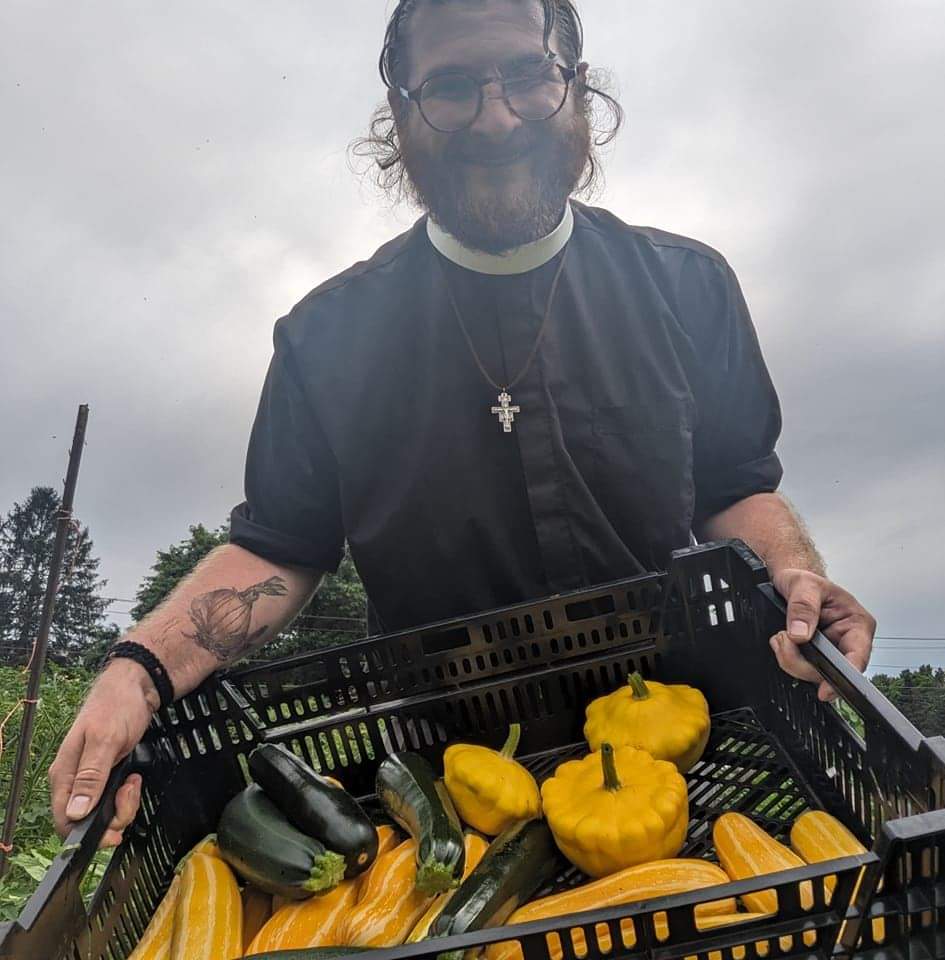 Christmas Propers III - Isaiah 52:7-10, Hebrews 1:1-4, Psalm 98, John 1:1-14
+What can I give him, poor as I am? If I were a shepherd, I would bring a lamb; if I were a wiseman I would do my part; yet what I can I give him- I give my heart. In the name of Emmanuel, God with us. Amen+ “We have all known the long loneliness…” These words of the prophet Dorothy Day ring true today, just as they did 90 years ago when she founded the Catholic Workers, and still even in that little town of Bethlehem some 2000 years ago. This holy night shines with a bright light, yet it is like every other night. There is a profound sadness throughout the world this night, even in the little town of Bethlehem, where celebrations of this great Feast are quiet and somber, yet hopeful in the midst of fear. In many ways, this Christmas is much like that first Christmas when an exhausted family, after a challenging year, was suddenly surprised by love beyond measure. The loneliness and fear of the Holy Family was in that moment transformed and that cold and empty barn became a home for a night, even if that night was fleeting. The Presence of God in the face of another human caused love to pour out the door and fill the streets with neighbors who may not have even known each other's names the night before. No matter where you have been this year, no matter where you will be tomorrow, tonight you are here in this building that is made holy by the Light of God shining in the face of another human. This year, we don’t hear Luke’s familiar and comforting story of the little baby in the manger, surrounded by the animals, shepherds, and angels in the time of the registration under Emperor Agustus. Instead we hear John’s testimony of Word and Light becoming Flesh. Many scholars like to pick on John, saying that Jesus tends to float through the Gospel, never really touching the ground. But tonight we hear quite the opposite! That Word that lovingly spoke Creation into being and that Light that shines bravely and boldly against all the heartbreaking chaos of the world, becomes Flesh (slap shoulder)! The God of all things, out of love at hearing our outcry, became one of us! Throughout John’s Gospel, Jesus is revealed through the simple and tangible material things that give us human creatures comfort. I am Light, so that you can see those you love. I am the Gate, protecting you. I am the Good Shepherd, leading you beside still waters and comforting you when you’re afraid. I am the Resurrection, I promise you will see them again. I am the Way, so you will never be lost or alone. I am the Vine and the Bread, you will never be hungry or thirsty when you gather together with your neighbors because I am with you. Yet we have all known the long loneliness and this night is like any other night. Tonight we will have the chance to hold in our hands the one who has held us from the beginning. One line of a hymn from the monastic tradition speaks to the particular holiness of this night “O wondrous interchange, the creator of humanity taking on a living body, willed to be born of Mary, coming forth into the world as a human, has made us partakers of Divinity”. As we gather together to celebrate the Eucharist, we are united to this wondrous interchange, we become partakers in this Divinity and that Word and that Light of God shines through us, we are fed in order to feed others. The miracle of the Incarnation is that all the beauty and sorrow, the joy and pain, the fellowship and yes the loneliness of life, is felt and known deeply by our God. No matter what this year, or all the years of your life have thrown your way, know that you have come to this night as one who is beloved. In her Revelations of Divine Love, Julian of Nowrich has a vision where she meets Jesus and she tries to cover her body, because she is ashamed of what life had done to her. She is ashamed of the scars and the brokenness because the world told her she should be ashamed, but Jesus gently moves her arm and says your scars are beautiful because they are proof that you lived. As you come forward for Communion tonight, know that God is touching you with the same motherly tenderness that touched Julian in her vision and behold in that little piece of bread what you are and become that same incarnate love for someone else this season. Just a few nights ago, on the longest night of the year, I was reminded of how simple it can be to share this light of love incarnate. I had been sitting in my living room, reading Dorothy Day’s autobiography, when out of the deep blue depth of that long night I got a message from a friend I haven’t seen in months. It was simple “Hey! Totally last minute impromptu, we’re holding a longest night of the year Compline, here’s the zoom link”. A simple gift. Light shone through the lonliness of that longest night as friends from up and down the east coast, from Massachusetts to Florida, came together to bear witness to that Word made Flesh. We shared stories and laughed and prayed and spent an hour together even though we were all incredibly busy with Christmas preparations. But that’s what Jesus does, breaking into the busyness, and the ordinary, and the lonely, and the day to day moments of life, to reveal the Love of God in the face of another person. I want to leave you with the closing quote from Dorothy Day’s The Long Loneliness to reflect on throughout our Christmastide celebrations. “We have all known the long loneliness and we have learned that the only solution is love and that love comes with community. It all happened while we sat there talking, and it is still going on.” The Word became flesh and dwelt among us, and it all happened while we sat there talking, and it is still going on. Amen. |